
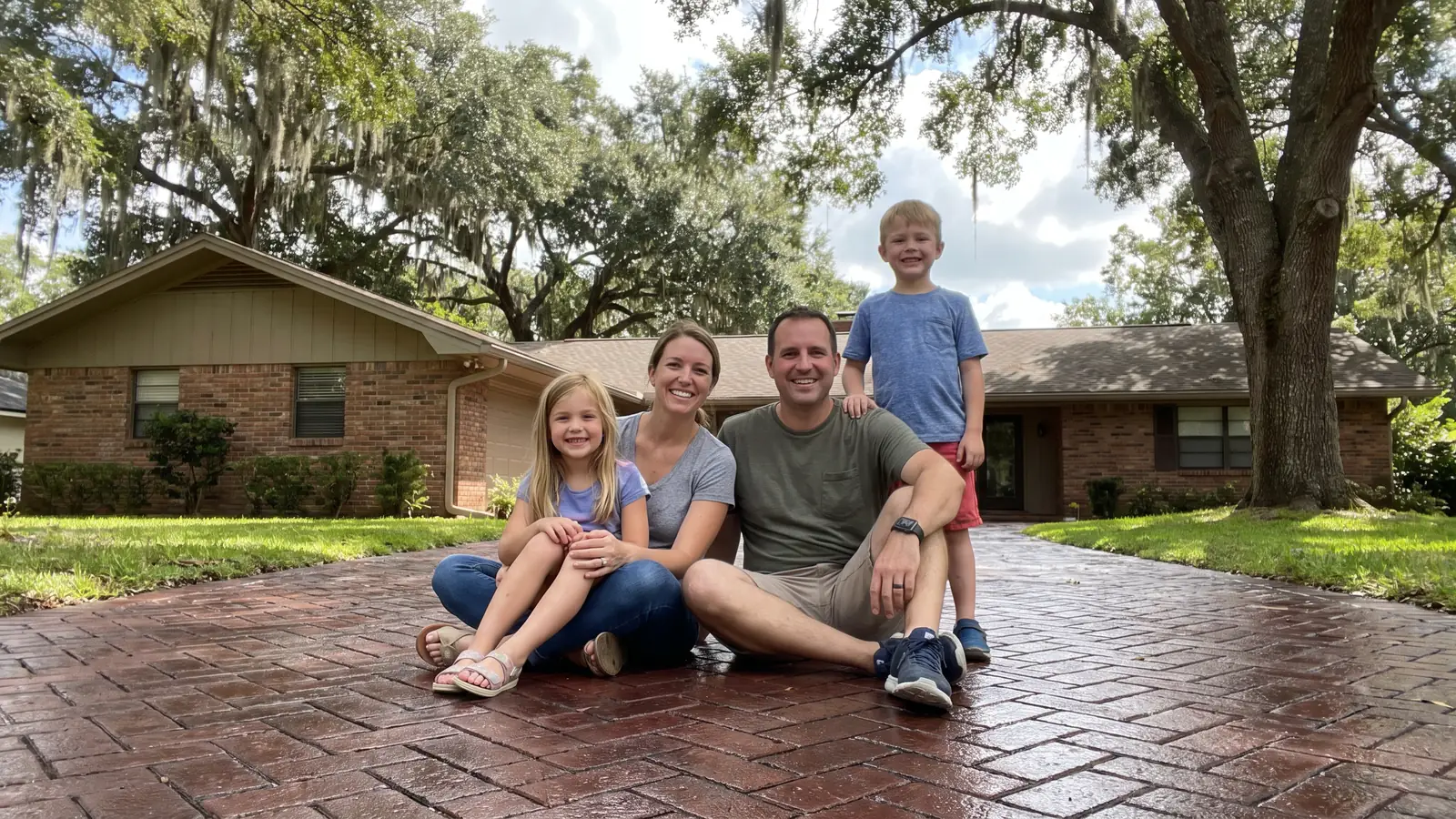
Paver sealing for Palencia homes
Paver Sealing in Palencia, FL
Many Palencia pavers are about ten years old, so call (904) 204-0884 for a free sealing estimate.
- Brings out deeper paver color
- Fresh joint sand helps lock pavers in place
- Gives weeds less room to grow
- Makes the surface easier to keep clean
- Free estimate, no obligation
Request a Free Estimate
Free, no obligation.
Fast, careful paver sealing in Palencia
Paver sealing is available across Palencia, from Palencia Village to the estate lots near the Tolomato River. The estimate is free, and a local contractor washes, re-sands and seals drives, walks, courtyards and pool decks. Call (904) 204-0884, and a reply should reach you within 1 business day, usually much sooner.
Picture a wide driveway that has turned gray at the edges, with sand missing from the joints and dark streaks under the oaks. After a wash, new sand and a fresh coat, the color evens out and the joints look tight again. If you want to ask about a pool deck or a courtyard first, you can ask for a free estimate.
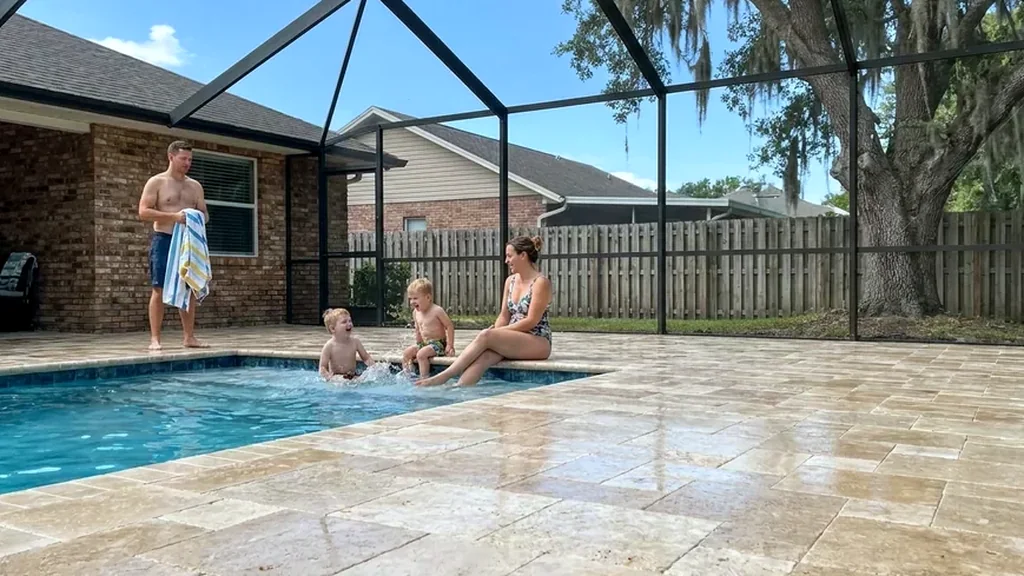
Why hire a local paver sealing contractor in Palencia?
Palencia homeowners often start with a local paver contractor, since the lots are large, the oaks were saved on purpose and the median home dates from 2015. To talk through what that means for your drive, ask for a free estimate.
Free look at the lot
The contractor inspects your Palencia pavers for free, then quotes a price before anything is agreed.
A published price range
A clean, sand and seal is posted at $1.75 to $3.25 for each square foot. Measure any bid against that.
A finish for the house
A matte coat sits quietly beside a Spanish colonial front. A wet look adds shine but shows scuffs sooner.
You make the call
Pick the date, pick the finish, or decline. Gate codes can be passed along ahead of the visit.
Get Your Free Estimate in Palencia
Tell us about your pavers in Palencia.
Free, no obligation
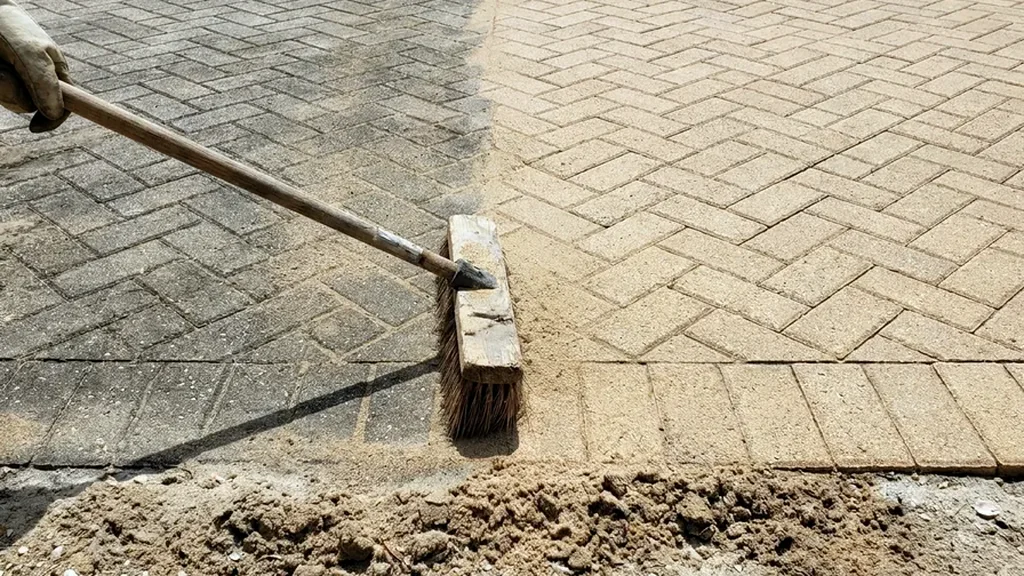
What paver problems show up most in Palencia?
Tannin and green film under saved oaks
Palencia's developer walked every lot and hand-marked the trees to save before builders started, and the golf course winds through old live oaks. That is good for shade and hard on pavers. A St. Johns County paver company says leaf tannins and mildew call for different cleaning than an open-sun driveway. Expect dark streaks where branches hang over a drive or walk, and slower drying in those same spots. A coat laid over that film would trap it, so the wash has to come first. The golf course has held Audubon Sanctuary status since 2002, and the oaks and open marsh around it are part of the setting. Shade here is permanent, not a passing problem. Hines, the developer, also built an environmentally sensitive stormwater system, so water is meant to leave the lots in planned ways, but shaded pavers still dry slowly.
Joint sand that storms carry off
St. Augustine's wet season runs May through October, with daily thundershowers and short, heavy downpours. One St. Augustine area company says many local installs used play sand that washes out in storms and sprinkler cycles. Empty joints let weeds and ants move in. The sand has to be replaced before any sealer goes on, which is why a sealing job always starts with the joints. Ant hills and weeds in the cracks are the usual first sign.
Pavers about ten summers old
The county roll puts Palencia's median home year at 2015, so many pavers here have seen about ten summers. That is long enough for color to fade and an early coat to wear thin. Early buyers arrived in 2000 and 2001, so the oldest pavers are well past two decades, and from Oak Common III to Mission Park and Trellis Park the age of the pavers depends on the street. A new coat tends to come due every two to five years, per company quotes. Try this: pour a little water on your drive. If it soaks in and darkens the paver, the coat is spent. If it beads, you likely have time. Either way, a free look gives you a clear answer.
Marsh air and damp corners
Palencia sits along two miles of the Intracoastal Waterway and Marshall Creek, with the Tolomato River close by. Shade and humidity grow algae on anything that stays damp, which on county lots often means side yards and north-facing patios. A pool surround also needs its own drying plan. The contractor checks moisture before sealing anything near water. Stokes Landing, next to the GTM Research Reserve, shows how much marsh surrounds this part of the coast. Sealing over a damp surface is what makes a coat turn cloudy.
Rust marks and an unknown old coat
Rust stains come from metal furniture, garden tools or iron-rich hard water, and iron-heavy irrigation can leave orange marks on a drive. If an earlier coat is peeling or cloudy, one St. Augustine company says it comes off first, since new sealer over failed sealer peels again. Nor can a water-based coat go over a solvent-based one. The contractor sorts out what is on your pavers before choosing a product. Old receipts or a neighbor's builder name can help.
Does a Palencia townhome need the same sealing job as a Costa del Sol estate?
No, because the two ends of Palencia differ in size, shade and exposure. Palencia Village, around Market Street and the Village Green, has townhomes and smaller paver areas. Costa del Sol, the last neighborhood built, has estate lots 90 to 100 feet wide and 180 to 300 feet deep, so a drive and courtyard there add up fast, with more time and a bigger total even at the same rate. Say which of the two you live in when you ask for a free estimate.
Palencia North is an 875-acre addition near the northern boundary, with 652 lots and over a mile of frontage on the Tolomato River and the Intracoastal. Lots beside the marsh deserve a closer look for damp, shaded corners, and the Pine Island Fish Camp sits within that stretch of frontage. Call (904) 204-0884 and mention your neighborhood by name, such as Vista Norte, Canterra or Marshall Creek Bluff.
A 2002 article says two production builders and seven custom builders worked here, and that each home has a completely different design. That means two neighbors can have different paver patterns, edge details and sealer histories. If you do not know who sealed your pavers last, the contractor can test and ask. If a gate rule affects arrival times, share that when you ask for a free estimate.
What does paver sealing cost in Palencia?
A clean, sand and seal around Northeast Florida commonly lists at $1.75 to $3.25 per square foot, and a failed old coat that must be stripped first costs more. Palencia drives tend to be wide and many lots add a courtyard and a walk, so total area drives the final number. A small area carries the same setup as a big one, so each square foot costs more. For a figure that fits your pavers, ask for a free estimate.
Access and material matter too. Gates, tight side yards and furniture that must move all change a quote, and travertine or natural stone costs more since it needs different sealer chemistry. A pool surround may need extra drying time. Tell the contractor about your layout when you call (904) 204-0884.
| Paved area | Typical example | Clean, sand and seal |
|---|---|---|
| 300 sq ft | Small patio or walkway | $525 to $975 |
| 600 sq ft | Two car driveway | $1,050 to $1,950 |
| 1,000 sq ft | Large driveway or pool deck | $1,750 to $3,250 |
| 1,500 sq ft | Driveway plus pool deck | $2,625 to $4,875 |
Math based on the $1.75 to $3.25 per square foot that Northeast Florida paver companies published as of November 2026. Your contractor sets the actual price after seeing the surface. Repairs, leveling and stripping failed sealer are usually extra.
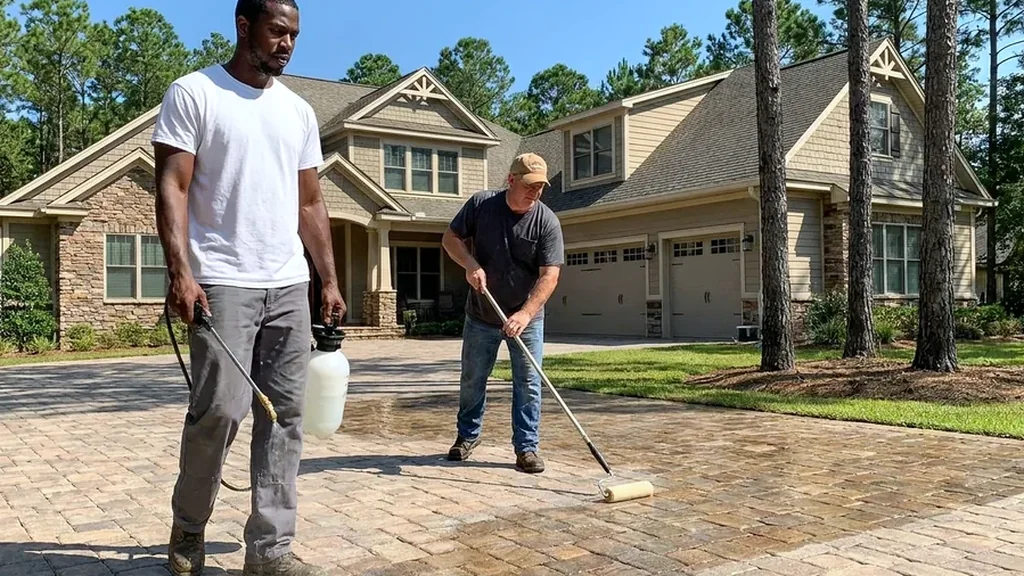
How does a paver sealing job work in Palencia?
Look over the lot and test the old coat
The contractor walks the whole property, including the drive, walkway and any pool deck, and checks joints for lost sand and looking for sunken or root-lifted spots. Costa del Sol lots run 180 to 300 feet deep, so a long drive can take extra time to measure and inspect. Dips and root-lifted spots get reset first, since sealing over a dip only preserves it. If an earlier coat is there, a test shows what it is, since a water-based coat cannot be laid over a solvent-based one. Point out any rust marks or sprinkler overspray too. Those tell the contractor where to look first.
Wash away tannin, algae and rust
Cleaning comes next, aimed at leaf stains, green film and orange marks. Rust and oil spots are treated before the rinse, and a faint trace can remain on a deep stain. Leaf litter packs into joints under the oaks, so that debris is cleared before new sand goes in. Rinse water is kept away from plantings and screens where it can be, and pressure is kept gentle so joint sand stays put. On shaded Palencia patios this stage takes the most care.
Put new sand in every joint
Washing and years of rain pull out the old joint sand, so fresh sand is worked in and the surface is swept. Full joints lock the pavers together and give weeds and ants nowhere to go. The coat never goes on ahead of this step. On a wide Palencia drive, expect this stage to take real time.
Wait for a dry surface
Sealer needs a dry surface, and sealing damp pavers is how white haze starts. Here the wet season runs May through October with near-daily storms, while November through April often brings long dry spells. The contractor checks the radar and holds off until the pavers are dry through. Shaded patios take longer to dry than open drives.
Coat it, then keep off
Spray goes on first, and a roller follows to level the coat and push it into the joints. People can walk on it after a few hours, and cars should stay off for a day. Matte keeps a Spanish colonial look quiet, while a wet look shows scuffs sooner on tire paths. The county roll puts the median home at about 3,559 square feet of living area, and drives and courtyards on homes that size often run large. Ask for the product name, and write it down for the next coat.
Complete paver services in Palencia
Four steps make up a Palencia job. The wash lifts tannin and green film, fresh sand fills each joint, a dry spell lets the surface settle, and the coat goes on last. An estate-size drive can fill a full day, and a pool deck adds drying time. For a time estimate on your lot, call (904) 204-0884.
Drives, front walks, courtyards and pool surrounds each age differently. Tire lanes take the abuse, covered entries stay shaded, and a pool deck needs a drying check and its own plan. Travertine and other natural stone are judged apart from concrete pavers. To list what you have, ask for a free estimate.
Start with the old coat. Water-based coats do not stack over solvent-based ones, so an unknown coat gets tested before anything is bought. Then comes the look, since matte suits a Spanish colonial front and a wet look deepens color but shows scuffs sooner. Call (904) 204-0884 to talk it through.
Timing follows the weather. Palencia sees daily thundershowers from May through October and long dry spells from November through April, and one Jacksonville company calls fall its preferred season because it is drier. A date can still slip after a storm, which is normal here and not a problem. To find a day that fits your street, ask for a free estimate.
Questions to ask before you hire
- Can I have your insurance details in writing before I book the date?
- When is payment due, and which forms of payment do you take?
- Do my pool deck and driveway get the same sealer, or two different ones?
- Will you reset any pavers that have sunk or rock loose before you seal?
- How will you deal with the weeds and ant hills coming up through my joints?
- Is the whole job in one price, from the first wash to the last coat?
- How do you protect my screen enclosure, my pool water and my front door?
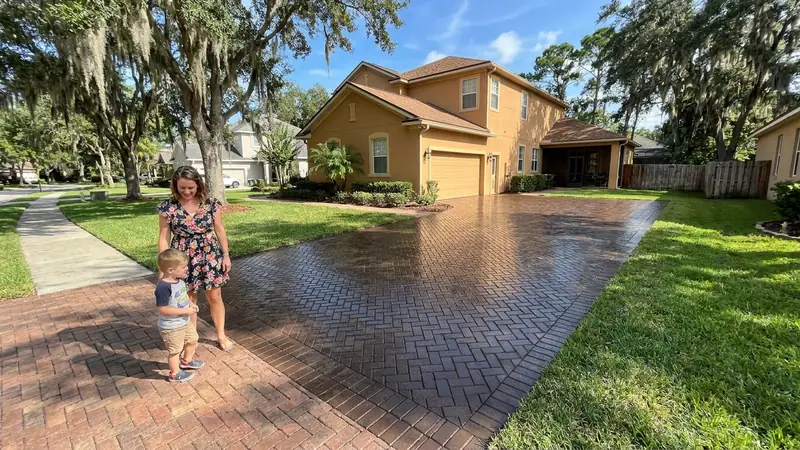
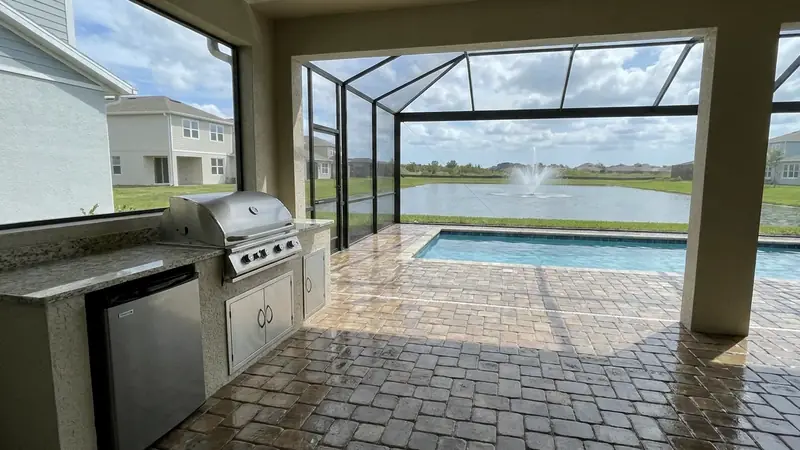
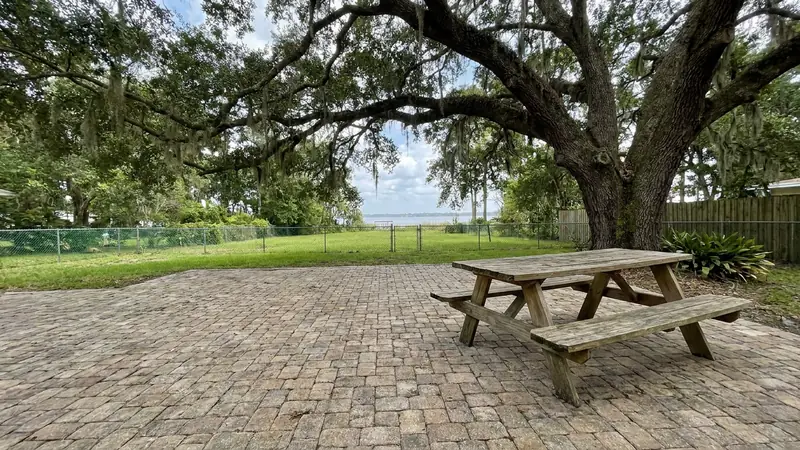
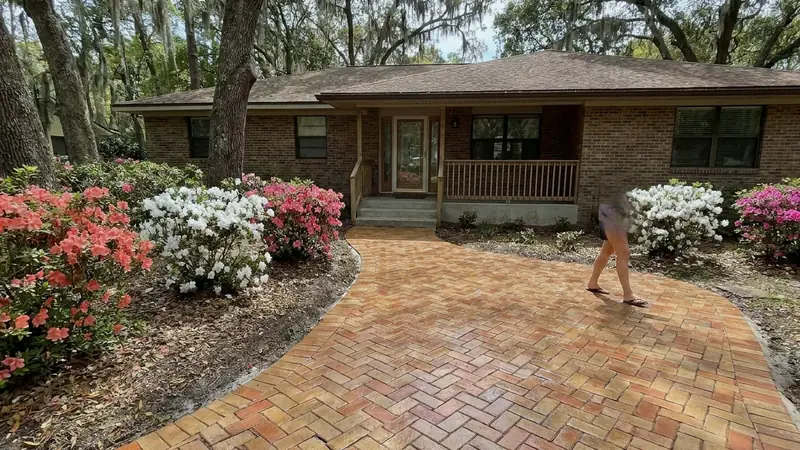
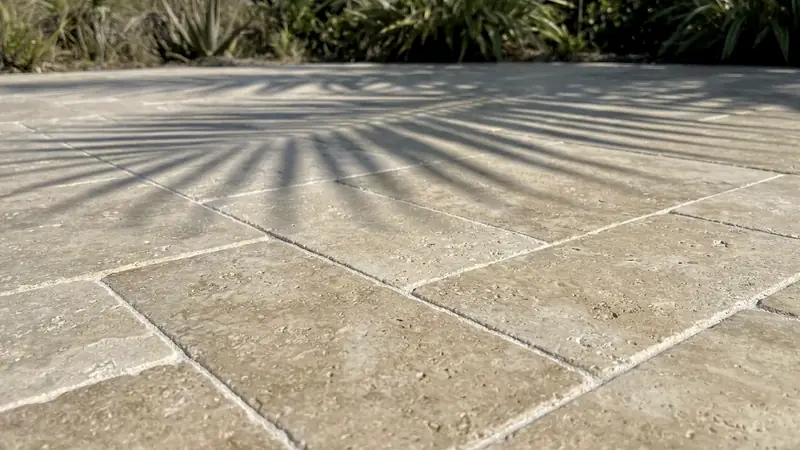
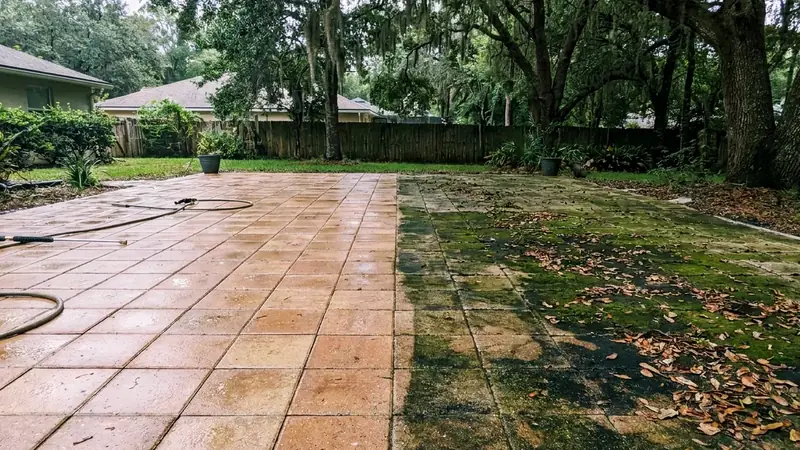
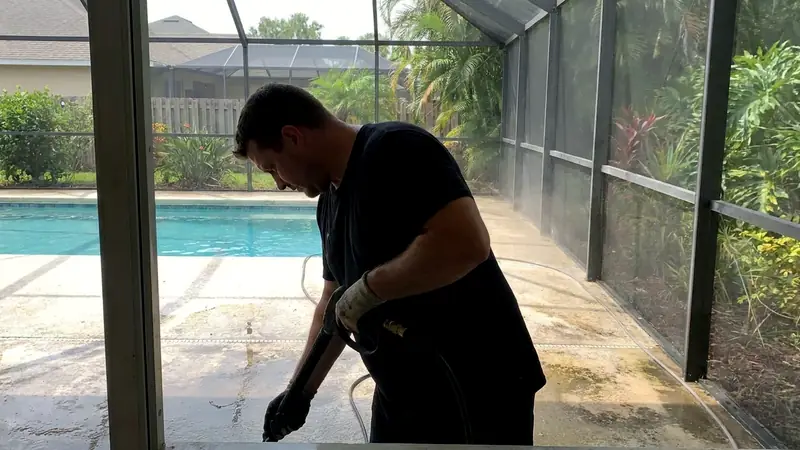
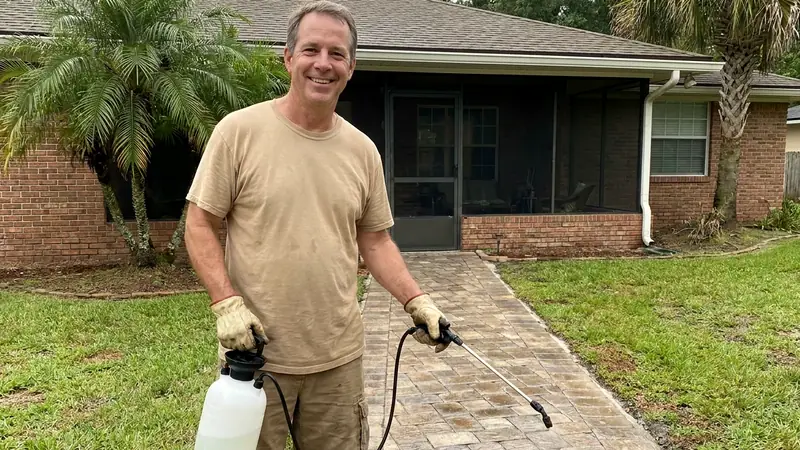
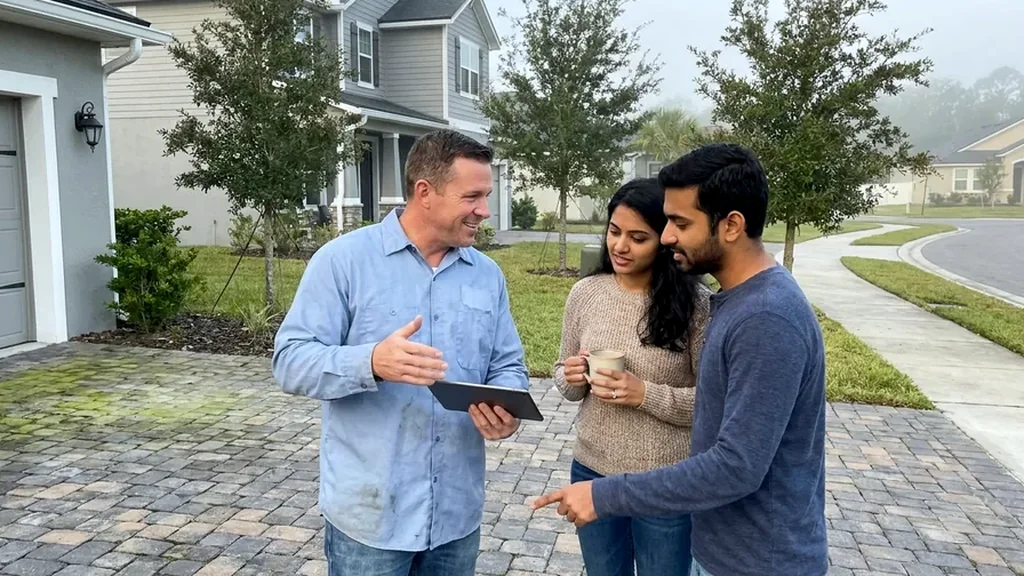
What do sealed pavers look like around Palencia?
Why local matters in Palencia
A contractor who works Palencia regularly knows the neighborhoods by name, from Palencia Village to Costa del Sol, and knows how the gated entrances work. That saves a round of phone calls before the first visit and keeps the estimate quick. Someone new to the area may not think to ask about saved oaks or marsh frontage. For a local contractor who works Palencia, call (904) 204-0884.
Local knowledge also shapes the schedule. Summer storms arrive almost daily in this part of St. Johns County, and shaded corners stay wet long after the sun returns. A contractor who plans around that waits for dry pavers instead of rushing a coat on, since a coat laid on damp stone can turn white and cloudy. You can ask for a free estimate and ask how a wet week is handled.
Older coats are another reason to hire someone local. Palencia homes came from many different builders, so the pavers underneath can differ from door to door. A local contractor tests before choosing a product, and can tell you what to write down for next time. If you are not sure who sealed your drive last, call (904) 204-0884.
What is Palencia's story, and does it matter to a paver contractor?
Palencia began as the Marshall Creek project, with full work starting in May 1997 on land with two miles of Intracoastal frontage and 400 acres of oak forest, and the 1,450-acre community was planned for 2,642 homes. It was designed to echo St. Augustine's Spanish colonial look, and a 2002 article says the planners drew on San Marco and Avondale. Knowing that history helps a contractor read the ground, the trees and the shade on your lot. If your home sits near the Village, ask for a free estimate.
The Arthur Hills golf course winds through old oaks beside the Intracoastal, and a 30-acre park system links trails, boardwalks and a fishing pier. The Tolomato River was called the North River in the British period, and many locals still say that. Stokes Landing Conservation Area, 2.5 miles away, has an observation platform over the marsh. Call (904) 204-0884 and mention the one closest to your street.
Frequently Asked Questions
Why is paver sealing so expensive for a Palencia home?
A big share of the money goes to labor before any sealer is opened: washing, new joint sand and drying time. Palencia drives and courtyards run large, and Costa del Sol lots are 90 to 100 feet wide, so a wide surface means more hours. The product itself is the smaller line on the bill, and the county roll lists the median home at about 3,559 square feet, so paved areas run large too.
What water-based paver sealer would a Palencia contractor use?
That depends on the pavers and on what is already on them, so the contractor decides after a look. Water-based products come in matte and wet look finishes. If a solvent-based coat is already down, it has to be stripped before a water-based one goes on.
How long does paver sealing last in Palencia, with all this rain?
Quotes run from two to five years per coat. Wide drives that take daily tires wear faster than shaded courtyards, and a coat that is ten years old has usually run its course. If water beads on the surface, protection remains.
What does it cost to re-sand and seal pavers in Palencia?
Published figures for a clean, sand and seal run $1.75 to $3.25 per square foot around here. Travertine, stripping old sealer and gated or tight access move a quote up. A written total with the measured area lets you compare bids.
Are Palencia pavers from about 2015 ready for a second coat?
Quite possibly. Early Palencia buyers arrived in 2000 and 2001, so some pavers are older still. The county roll puts the median Palencia home year at 2015, so many pavers are about ten summers old, which is longer than most coats last. A free look settles it, and it takes little time.
How long should new Palencia pavers wait before the first coat?
Sources differ. One St. Augustine company says 60 to 90 days so white mineral haze can come up, and a Jacksonville company says 30 to 60. Joints are re-sanded before the sealer goes on, not after.
Do sprinklers cause the orange marks on my Palencia drive?
Often, yes. Iron in irrigation water leaves orange stains on drives and walks, and so can metal furniture or garden tools left on the surface. Rust is treated before the rinse, and a faint trace may remain on a deep stain.
Can sealer go over an older coat on a Palencia driveway?
Only if the two products are compatible. Compatibility decides it. Solvent-based sealer underneath rules out water-based on top, and cloudy or peeling coats come off first. A short test tells the contractor which case you have.
Ready for a Free Estimate in Palencia?
Call (904) 204-0884 and tell us about your pavers.
Free, no obligation