
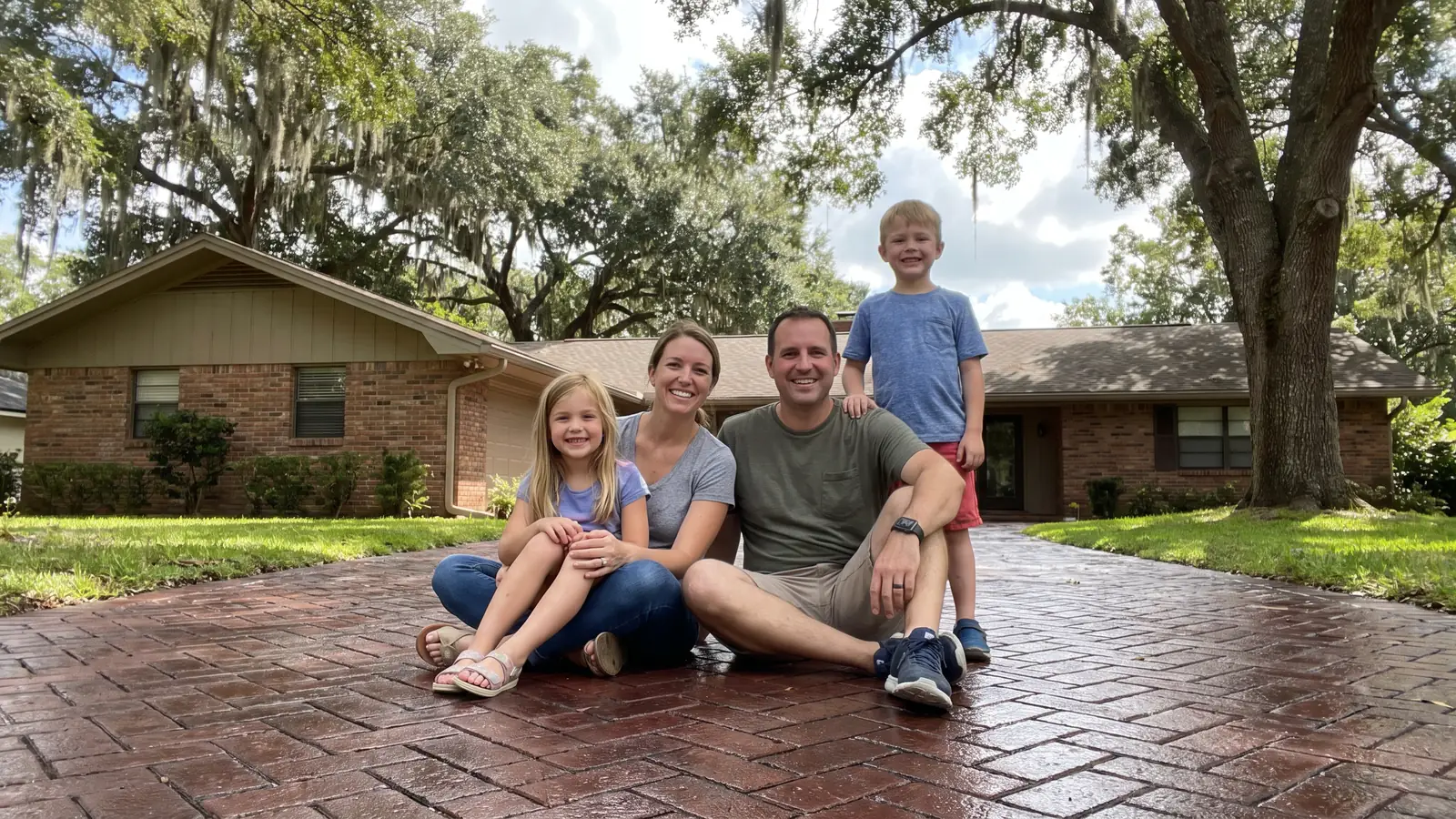
Paver sealing for San Jose homes
Paver Sealing in San Jose, FL
From Spanish Revival bungalows to newer builds, San Jose pavers get a free sealing estimate when you call (904) 204-0884.
- Brings out deeper paver color
- Fresh joint sand helps lock pavers in place
- Gives weeds less room to grow
- Makes the surface easier to keep clean
- Free estimate, no obligation
Request a Free Estimate
Free, no obligation.
Fast, careful paver sealing in San Jose
Paver sealing in San Jose starts with a free estimate for your driveway, courtyard or pool deck. A local contractor washes the pavers, restores the joint sand and applies the sealer. A reply arrives within 1 business day, usually much sooner, after you ask for a free estimate.
Maybe your drive has gone gray under the oaks, or the joints beside the garage have thinned out and sprouted weeds. Those are signs the old coat has worn through. Call (904) 204-0884 and describe what you see, so the contractor arrives knowing what to look for. The estimate carries no obligation.
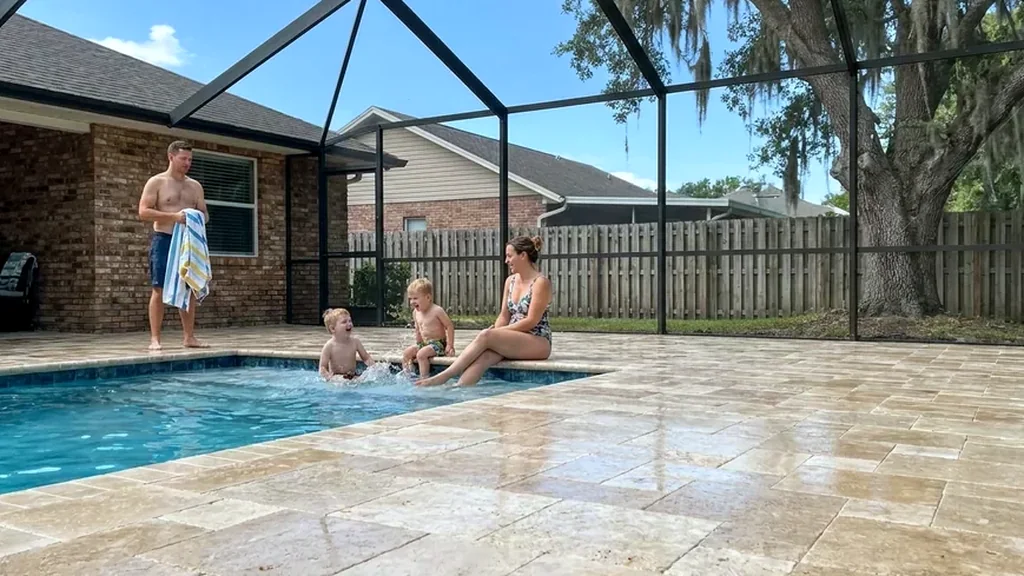
Why hire a local paver sealing contractor in San Jose?
San Jose mixes homes from the 1920s plan, postwar subdivisions, waterfront estates and gated communities. Some come with their own rules for exterior work. Many owners look for a contractor who is used to that, and you can ask for a free estimate.
A free estimate in writing
A contractor measures your San Jose pavers and sends a written quote. There is no charge and no obligation to go ahead.
A price range to hold up
Local companies list $1.75 to $3.25 per square foot to clean, sand and seal. Lay any San Jose bid next to that figure before you decide.
Gates handled ahead of time
Gated streets can limit contractor hours and vehicle access. Tell the contractor how your gate works when you book, and the visit is planned around it.
A sheen that fits the house
Matte sits quietly beside stucco and older stone. A wet look adds shine but shows scuffs sooner on drive lanes.
Get Your Free Estimate in San Jose
Tell us about your pavers in San Jose.
Free, no obligation
What paver problems show up most in San Jose?
Shade and moss under San Jose oaks
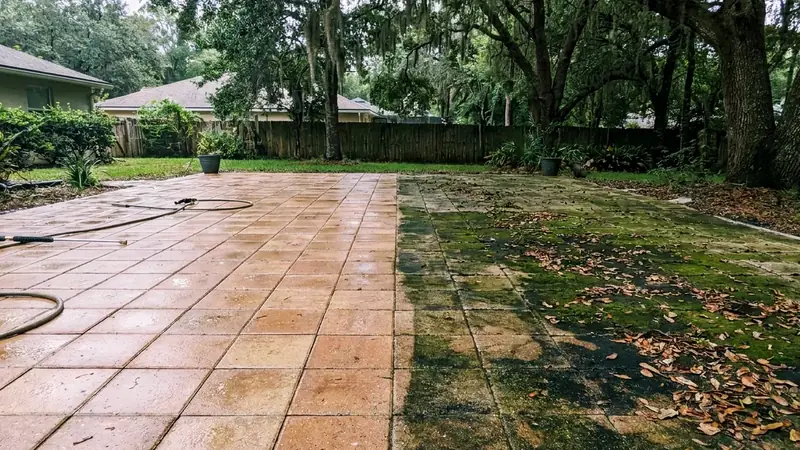
Most San Jose homes have lawns shaded by large oaks with draping moss. UF/IFAS says live oaks spread 60 to 120 feet, which is wider than many lots. Green algae grows in shaded, damp spots such as under trees and patio roofs. Pavers there turn slick and dark, so the wash comes first and the sealer second. Matte sealer keeps the natural look, and a sealed surface rinses clean more easily after leaf drop. The shade that goes with that moss keeps pavers damp longer.
Older pavers on settled ground
The Ortega sand series, typed in Duval County, drains fast but can see its water table rise for days after heavy rain. A paver maker says a weak base is a leading cause of sinking, and missing edge restraints let pavers drift apart. Sealing over a dip only preserves it. Low spots and loose edges are fixed before the coat goes on. The reset adds a line to the quote, so you see what it costs. Ask the contractor to point out any spot that holds water after rain.
Waterfront pavers after storms
Near Jacksonville the St. Johns River is an estuary, and a nor'easter can raise the water several feet. Pavers on waterfront lots may sit wet and dirty after a big blow. Sealer needs dry pavers, so the job waits for them to dry out. A fresh coat later makes dirt easier to rinse away. If your pavers sit near a seawall or dock, mention it when you book. A good rinse comes before any coat, so river residue does not get sealed in.
Thin joints and weeds
When joint sand washes out, joints widen and soil settles in, which invites weeds. Jacksonville gets about 52 inches of rain a year, mostly in short, hard summer downpours. That is a lot of chances for sand to wash. New sand goes in after cleaning, and sealer helps lock it in. Weeds that have already rooted are cleared during the wash. Open joints can also invite ants, which is another reason to refill them. Ants can move into open joints too.
Old sealer that has failed
A white, hazy or flaking coat from an earlier job has to be stripped before new sealer goes on. Another local company reports that earlier oil-based coats must come off first, which is roughly 10 to 20 percent of its jobs. The contractor checks the surface at the estimate, so you know before the quote. Sealing over that old coat would trap the haze, so the strip comes first. Test a small spot first when the history of the old coat is unknown.
Which San Jose neighborhoods and streets get paver sealing?
Paver sealing reaches all of San Jose, which runs along the St. Johns River south to San Clerc Road. University Boulevard marks the north edge, and the railroad tracks west of US 1 mark the east. That covers waterfront mansions and small wood-frame starters alike. Call (904) 204-0884 with your street and the contractor will tell you what to expect.
Parts of San Jose follow John Nolen's 1925 plan, with streets named for Spanish cities. Epping Forest, a 58-acre riverfront estate, became a gated community of about 90 homes and 80 condominiums. Gated streets may limit contractor hours and vehicle access, so say so when you ask for a free estimate.
If your home is in a local historic district or is a local landmark, the city asks for a Certificate of Appropriateness. That covers exterior work, and driveways are named as an example. Check your address on the city's Land Development Map. An HOA may add its own rules, so call (904) 204-0884 with what you find.
What does paver sealing cost in San Jose?
Jacksonville firms quote $1.75 to $3.25 per square foot for the clean, sand and seal package, and that is your yardstick. A San Jose bid is firm only after the contractor looks at the joints. Big waterfront driveways simply have more square feet to cover. To get your number, ask for a free estimate.
Failed old sealer that must be stripped raises the cost. So do heavy algae, deep rust and a gate that slows access. Small courtyards can cost more per square foot, since setup time does not shrink with size. Call (904) 204-0884 to ask what would move your price.
| Paved area | Typical example | Clean, sand and seal |
|---|---|---|
| 300 sq ft | Small patio or walkway | $525 to $975 |
| 600 sq ft | Two car driveway | $1,050 to $1,950 |
| 1,000 sq ft | Large driveway or pool deck | $1,750 to $3,250 |
| 1,500 sq ft | Driveway plus pool deck | $2,625 to $4,875 |
Math based on the $1.75 to $3.25 per square foot that Northeast Florida paver companies published as of November 2026. Your contractor sets the actual price after seeing the surface. Repairs, leveling and stripping failed sealer are usually extra.
How does a paver sealing job work in San Jose?
Look at the pavers and the access
A contractor walks the driveway, courtyard and pool deck, measures each one and checks the gate, parking and water access. You do not need to be home. A written quote follows with the sealer brand named. Photos of any problem spots help the contractor price it accurately. Older pavers get a closer look at the edges.
Clean and treat
Algae, dirt and leaf stains are washed away, and rust or oil spots are pre-treated. Concrete pavers can lose their surface above 3,000 PSI, so the wash is kept under that. Old failed sealer is stripped at this stage. Rinse water is directed away from the house and toward the lawn or street. A badly stained spot may take another round.
Fix what moved
Sunken sections and drifted edges are reset before sealing, because a coat only preserves what is there. This is also when the contractor notes any slope that holds water. Repairs are quoted as their own line. You are told about any repair before it starts, so there are no surprises. Low corners near the garage get checked first.
Refill the joints with sand
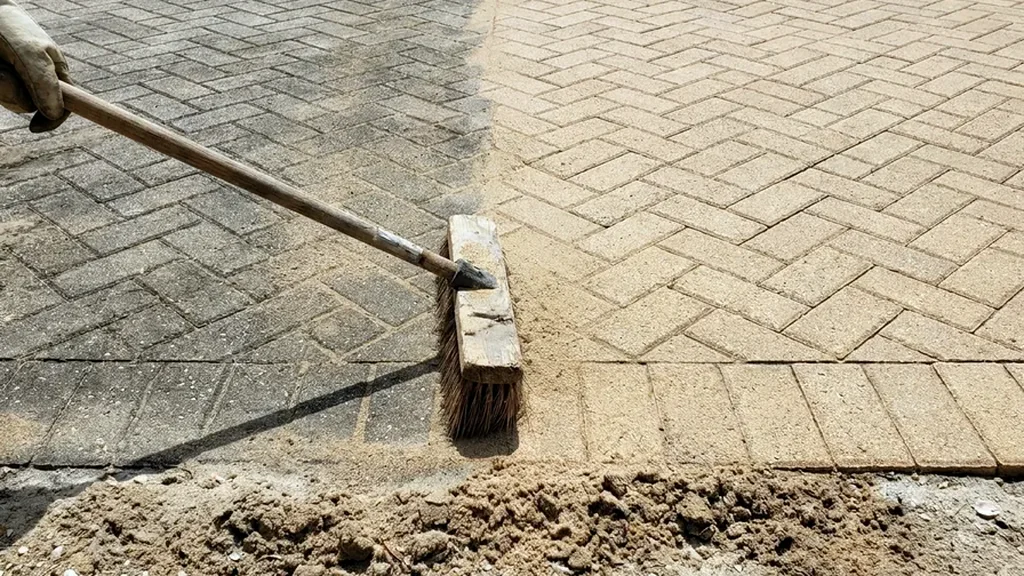
New joint sand is swept in until the gaps are full. Full joints keep weeds out and hold the pavers tight against each other. The sealer then helps keep the sand in place. Sand color can be matched to what is already in the joints. Several passes with a broom settle the sand.
Seal in even coats
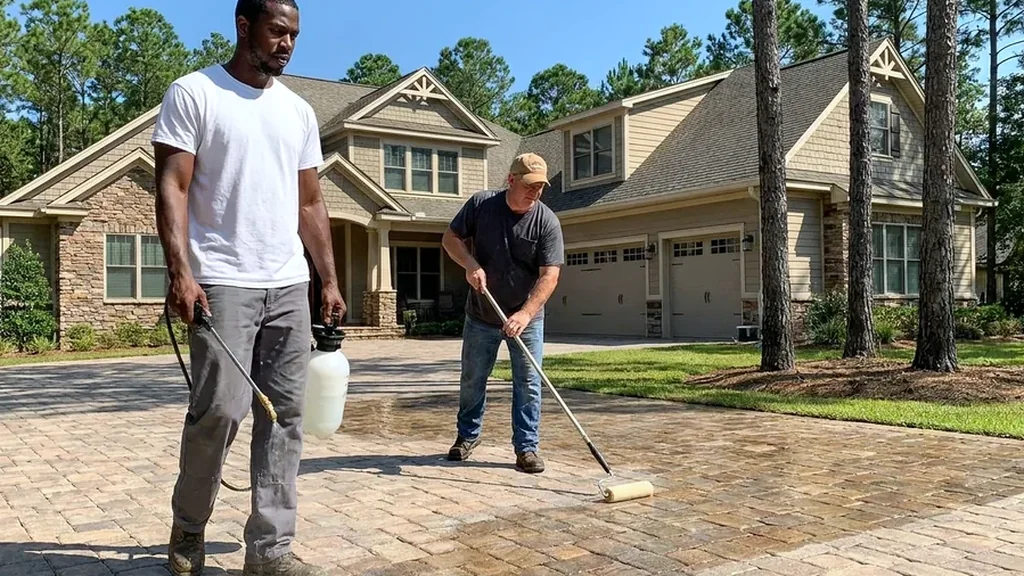
The sealer goes on with a sprayer and is then rolled out so the coverage stays even. Walking on it is fine after a short wait, and the driveway stays closed to cars for about a day. A last walk-through shows you how water beads on the finished surface. The contractor also tells you when the next coat is likely due. Sprinklers should stay off until the coat has cured.
Complete paver services in San Jose
Every San Jose job follows one order of work. The contractor washes the pavers, lets them dry, refills the joints with sand and then seals. On older pavers the contractor also checks for edges that drifted and joints that opened up. Repairs come before any coat, so ask for a free estimate to hear what yours need.
San Jose lots hold driveways, courtyards, front walks, patios and pool decks. A courtyard in shade grows film, a driveway takes tire wear, and a pool deck takes splash. A film on a wet deck can turn slick, so pool surrounds usually get a penetrating product. Call (904) 204-0884 and list each surface so it gets its own price.
Sealer finishes run from matte through satin to a high-shine wet look. Water-based product cannot be laid over solvent-based product, so the contractor needs to know what was used before. A wet look deepens color but shows wear sooner. Ask that the brand be named on the quote, then ask for a free estimate.
Sealer needs a dry surface, and this part of Jacksonville gets most of its rain from May to September. The drier stretch runs from November to April, which makes it easier to schedule. Foot traffic is usually fine in 2 to 4 hours, and cars wait 24 hours. To find an open week, call (904) 204-0884.
Questions to ask before you hire
- How do you protect my screen enclosure, my pool water and my front door?
- When is payment due, and which forms of payment do you take?
- Is the whole job in one price, from the first wash to the last coat?
- Do my pool deck and driveway get the same sealer, or two different ones?
- If a storm hits the afternoon you finish, will you come back and check the coat?
- How long do the pavers need to dry after the wash before the sealer goes on?
- What sealer would you put on my pavers, and why that one?
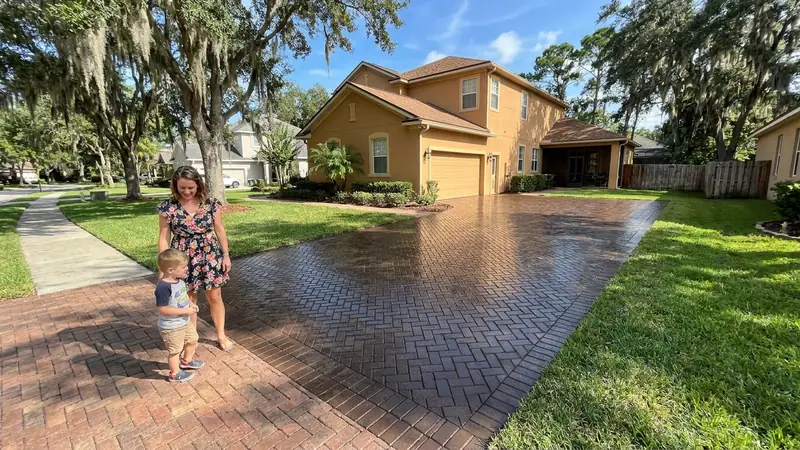
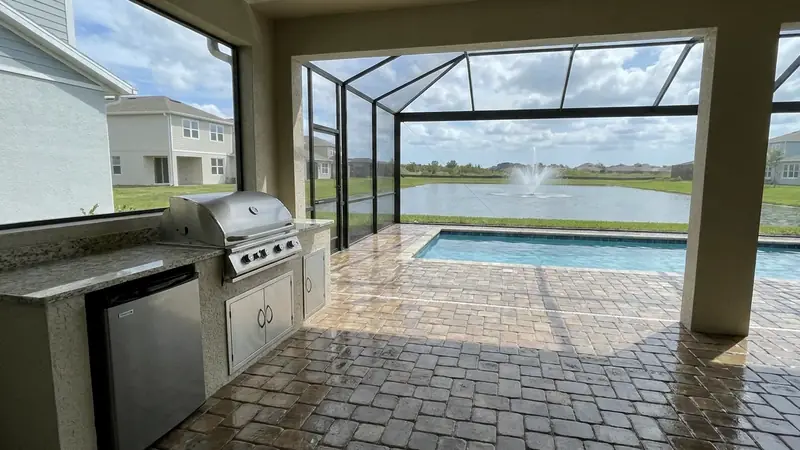
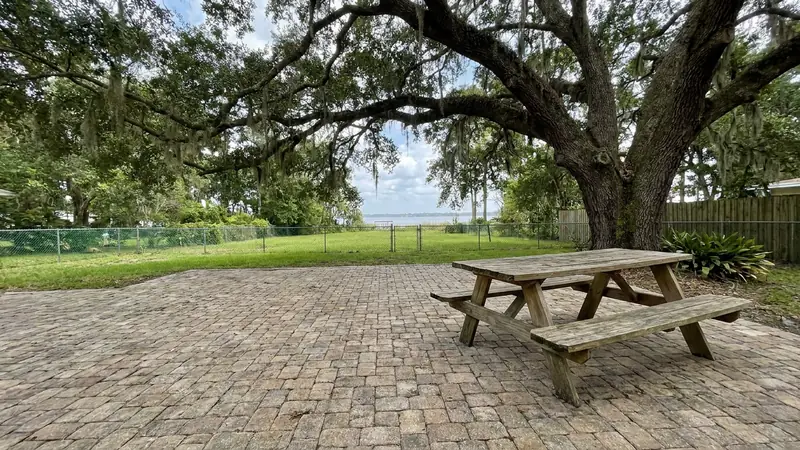
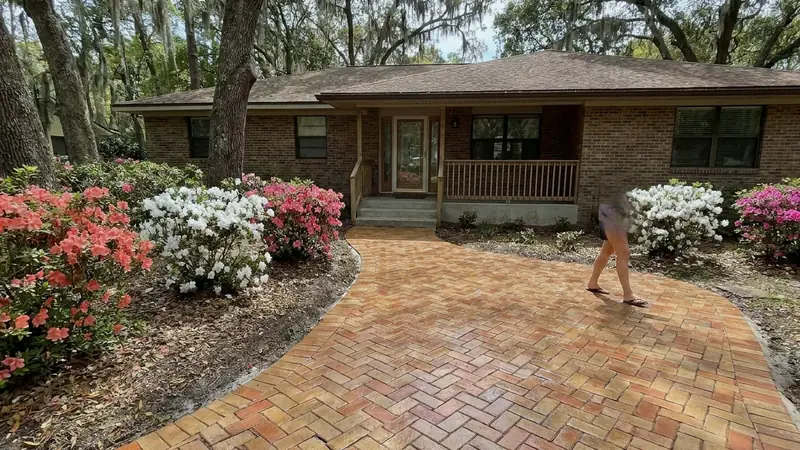
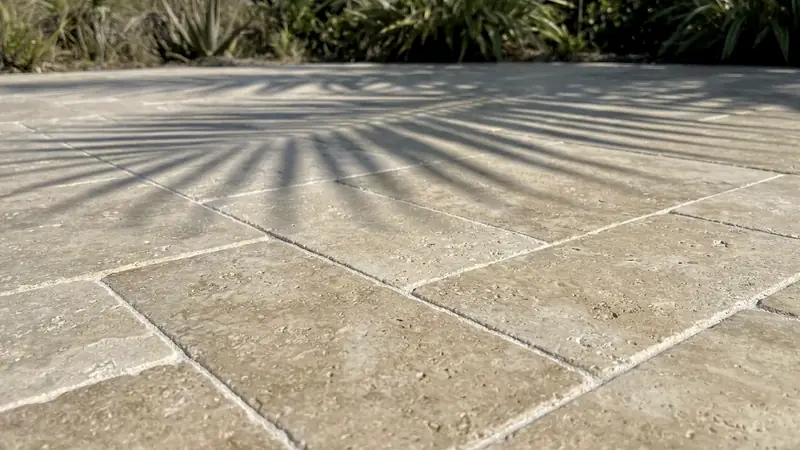
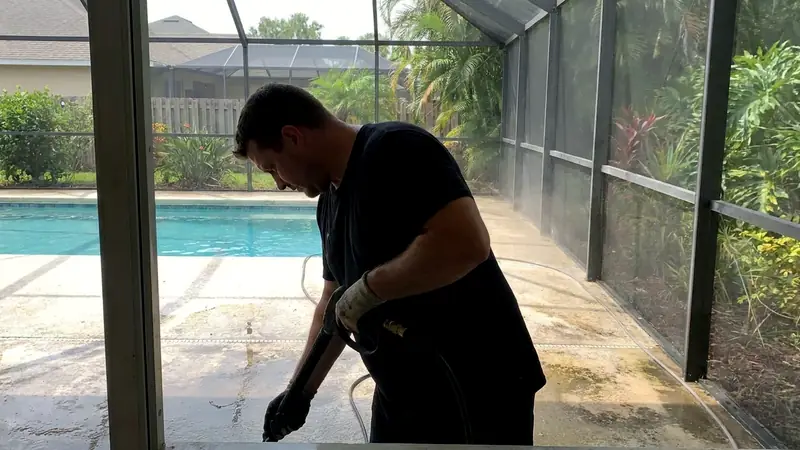
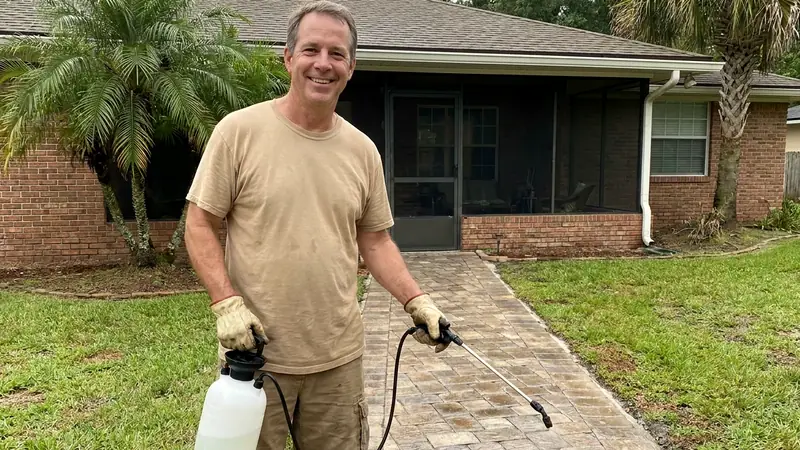
What do sealed pavers look like around San Jose?
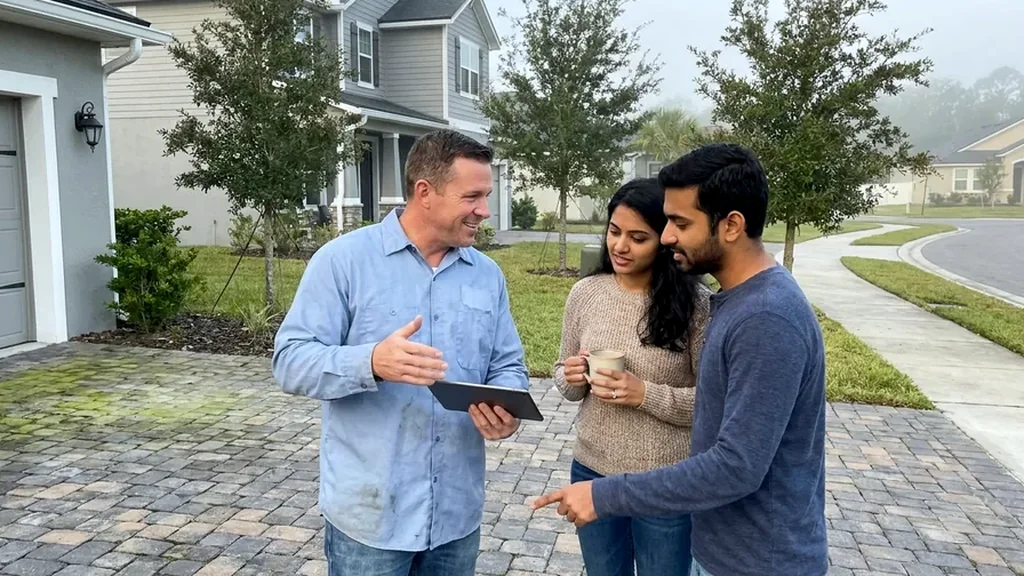
Why local matters in San Jose
San Jose sits about 4.5 miles from downtown Jacksonville, so a contractor based on this side of the river can reach it quickly. That makes the estimate visit easy to schedule. A return visit is simple too if something needs a look. To book, ask for a free estimate.
A local contractor knows that San Jose has gated communities, a historic core and postwar blocks, each with its own habits. That knowledge saves time at the gate and at the curb. Call (904) 204-0884 and tell the contractor which part of San Jose you live in.
A contractor who works nearby has also watched how oaks, river weather and sandy ground treat pavers year after year. That experience helps judge whether a surface needs a quick wash or a full strip. When you are ready, ask for a free estimate.
What makes San Jose different from other Jacksonville neighborhoods?
San Jose began as a planned development in 1925, drawn by John Nolen with a golf course by Donald Ross. Its first phase sold out by August 10, 1925, and by 1928 only 31 homes had been built. Homes on Via de la Reina are on the National Register. Call (904) 204-0884 to talk about your own pavers.
The San Jose Hotel became part of The Bolles School in the 1930s. Goodbys Creek Preserve, 39 acres along the creek, sits near the line with Mandarin. Camp Tomahawk Park holds mature oak, pine and maple between San Jose and Beauclerc. If your pavers have faded, ask for a free estimate.
Frequently Asked Questions
Why is paver sealing so expensive in San Jose?
Most of the price is prep and labor. Washing, drying, re-sanding and careful application take time, and large driveways add more of it. Expect figures near $1.75 to $3.25 per square foot for the full clean, sand and seal. A bid far under that range may skip steps. Ask each bidder what the number includes.
Which water-based paver sealer is right for San Jose homes?
A water-based acrylic is common on driveways and walkways. It cannot go over solvent-based sealer, so the contractor finds out what is already there. Pool decks usually get a penetrating sealer. Ask for the brand to be named on your quote. If your pavers were sealed with a different type last time, the contractor may need to strip first.
How long does paver sealing last in San Jose?
Figure on a span of two to five years until the next coat. Sunny drives and pool decks tend toward the short end, while patios under a roof can stretch longer. Water that soaks in instead of beading is the clearest sign it is time. The contractor can test a spot during the estimate. Full sun, pool chemicals and storms all cut the span.
How much does it cost to re-sand and seal pavers in San Jose?
Re-sanding is included in the clean, sand and seal price of $1.75 to $3.25 per square foot, since washing pulls sand from the joints. Stripping failed sealer costs extra. The contractor prices the job after looking at your joints. The estimate itself is free.
Do historic San Jose homes need approval before sealing pavers?
Possibly. The city requires a Certificate of Appropriateness for exterior work on local landmarks and homes in local historic districts. Driveways are named as an example. Look up your address on the Land Development Map. If you are listed, ask the city if sealing counts.
Can pavers be sealed inside a gated San Jose community?
Yes, with a little planning. Gated communities can limit contractor hours and vehicle access, so give the contractor your gate and visitor list details when you book. That lets the crew arrive on time and park where allowed. Mention any limits on truck size or parking so nothing delays the start.
Does an HOA in San Jose control paver sealer color?
It can, if its documents say so. Florida law lets an association review changes to appearance only as far as its declaration or published guidelines state. Read your guidelines before booking, especially anything about sheen or color. Ask the board for approval in writing.
Is sealing worth it for older San Jose pavers?
Often, as long as the pavers are sound. Sealing holds joint sand, slows weeds and makes stains easier to rinse. It does not fix sunken sections, which are reset first. A free estimate will tell you whether yours need repair before a coat. Pavers with deep cracks or heavy movement need repair before sealing, and the contractor says so up front.
How soon can I drive on newly sealed pavers in San Jose?
Plan on a few hours before anyone walks on it and a full day before cars. A local company says its own product wants 2 to 4 hours before anyone walks on it and 24 hours before cars. Your contractor will confirm the window for your product and the weather. Park on the street until then.
Is paver sealing worth it in San Jose?
In most cases, yes, provided the pavers are sound. A coat keeps joint sand from washing out, slows weeds and gives stains less to grip. San Jose owners also get back color that years of sun have taken. Upkeep is the cost, because coats wear down over time. A free estimate puts a number on it first.
What can raise the cost of sealing pavers in San Jose?
Failed old sealer that must be stripped is the biggest add. Heavy algae, deep rust or oil, and long waits at a gate also add time. Small jobs cost more per square foot because setup does not shrink. Ask the contractor to name what moved your price.
Does the contractor need me home for a San Jose estimate?
No. A contractor can measure from outside and look at the pavers while you are away. If a gate or code is involved, give those details when you book. A written quote follows.
Ready for a Free Estimate in San Jose?
Call (904) 204-0884 and tell us about your pavers.
Free, no obligation